GCSE maths revision & step-by-step help
Stuck on a topic? Use these free tools to get step-by-step walkthroughs and worked solutions—no sign-up, no account. Just type in your question and we’ll show you how it’s done. Perfect for KS3 and KS4 (Years 7–11), whether you’re with Edexcel, AQA or OCR.
Maths whiteboard
Ruler, protractor, compass and tracing paper. No sign-up.
Try Maths whiteboard →How to Pass GCSE Maths: A Step-by-Step Guide to Avoiding Common Pitfalls
How to Pass GCSE Maths: A Step-by-Step Guide to Avoiding Common Pitfalls
Every year, students across the UK sit their GCSE Maths exams. While some stumble into avoidable traps, others navigate the paper with confidence and skill. This guide is your antidote to failure—a direct response to the pitfalls outlined in our companion post, How to Fail GCSE Maths Most Spectacularly. We’ll flip the script and show you exactly what to do to succeed.
1. Master the Basics: Your Foundation for Success
The most spectacular failures often stem from shaky foundations. Don't let that be you.
Know Your Formulae: For the Edexcel, AQA, and OCR exams, you need to memorise the formulae not provided in the exam. Create flashcards for the quadratic formula, trigonometric ratios (SOH CAH TOA), circle theorems, and compound interest. Test yourself weekly.
Arithmetic Agility: Be fluent with fractions, decimals, percentages, and negative numbers. A simple arithmetic slip can derail an entire 5-mark problem. Practise mental maths daily.
Algebraic Fluency: You must be able to expand brackets, factorise expressions, and solve linear equations in your sleep. These skills are the building blocks for nearly every higher-tier topic.
2. Read the Question – Then Read It Again
Rushing is the enemy. Follow this systematic approach to ensure you answer the question that was actually asked.
flowchart TD
A[Read the Full Question] --> B[Underline Key Words and Numbers]
B --> C{Identify Command Word}
C --> D[“e.g. 'Calculate', 'Solve', 'Explain'”]
C --> E[“e.g. 'Show that', 'Prove', 'Hence'”]
D --> F[Perform the required operation]
E --> G[Use previous answer or logical steps]
F --> H[Check units e.g. cm², £, m/s]
G --> H
H --> I[Final Answer in Correct Form]
Pay special attention to:
Units: Is the answer required in centimetres or metres? Converting at the end is a crucial step.
Accuracy: Does it say "to one decimal place" or "3 significant figures"?
Context: If it’s a money question, your answer should be in pounds (£), e.g., £12.50, not 12.5.
3. Show Your Working – Every Single Time
Even if your final answer is wrong, method marks can save your grade. Examiners can only award marks for what they see on the page.
Good Practice:
> Solve 3(x + 4) = 5x - 2
> Working:
> 3x + 12 = 5x - 2 (Expand bracket)
> 12 + 2 = 5x - 3x (Rearrange)
> 14 = 2x (Simplify)
> x = 7 (Solve)
This working would secure all four marks, even if a final arithmetic slip led to a wrong answer. A random "7" in a box might get only one.
4. Tackle Problem-Solving & Worded Questions
These questions separate the grade 7s from the 9s. Don't panic. Your strategy is:
Decode: What is the problem really asking? Identify the underlying maths topic (e.g., ratio, Pythagoras' theorem, forming an equation).
Plan: Write down what you know and what you need to find. A quick sketch can be invaluable.
Execute: Apply the relevant maths method with clear steps.
Review: Does your answer make sense in the context? Is a person's height 2 metres or 200 metres?
5. Develop a Strategic Revision Plan
Cramming doesn't work for maths. You need to build skills.
Use the Specification: Download your exam board's (AQA/Edexcel/OCR) specification. It lists every single topic you can be tested on. Tick them off as you master them.
Past Papers are Gold: In the final months, practise under timed conditions. This is the single most effective revision activity. Afterwards, spend twice as long analysing your mistakes as you did taking the paper.
Focus on Weaknesses: It’s more comfortable to practise what you’re good at. Be brave and target your weakest areas first. Use resources like MathsGenie or Corbett Maths for topic-specific practice.
6. Exam Day Strategy: Keep Your Cool
Time Management: Have a watch. Allocate roughly 1 minute per mark. If a 3-mark question is taking 10 minutes, move on and come back later.
The Paper is Your Friend: Use the blank space for working. Draw diagrams for geometry q
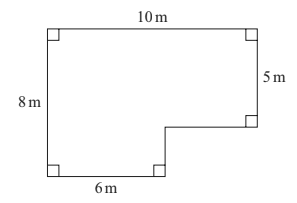
(a) Does Petra have enough paint to cover the floor? You must show all your working.
(b) It is later found that 1 litre of paint actually covers 11 m² of floor. Does this affect your answer to part (a)? Give a reason for your answer.
Start with today’s featured resource above, have a go at the exam question of the day, then explore all the tools below. Practise with real data in our free football maths quiz and worksheet—points, goal difference and averages using live Premier League and Championship league tables. Everything’s free, works in your browser and shows full step-by-step working—great for revision and homework.
More tools
-
Expand brackets
Type in two brackets like
(x+6)(x+7)and get a full walkthrough with the FOIL method and grid method. No more guessing—see every step. -
Factorise quadratics
Stuck factorising? Enter your quadratic (e.g.
x²+13x+42) and we’ll show you step-by-step how to factorise it—or use completing the square if it doesn’t factorise nicely. -
Nth term finder
Got a sequence (or a term-to-term rule)? Paste in your numbers or your nth term and we’ll work out the formula step by step, find the 67th term, and tell you if a number is in the sequence.
-
Number Explorer
Explore any number: place value, prime factors, divisors, sum of digits, Roman numerals, binary and more. Handy for number facts and “number of the day” style practice.
-
Area and perimeter calculator
Choose a shape (square, rectangle, triangle, trapezium, circle, L-shape), add dimensions, and get step-by-step area and perimeter—or find a missing side from a given area or perimeter.
-
Standard form calculator
Convert to and from standard form, and add, subtract, multiply and divide with step-by-step working. Covers same and different powers of 10.
-
Currency converter
Live exchange rates (ECB) or enter your own rate. Convert between GBP, USD, EUR and 30+ currencies—useful for real-world maths and problem-solving.
-
Symmetry mirror
Upload an image or diagram, then place and rotate a virtual mirror to find lines of symmetry. See the reflection in real time—great for symmetry topics.
-
Maths whiteboard
Ruler, protractor, a compass that works like a real compass, and usable tracing paper. Draw constructions and diagrams—no sign-up.
-
GCSE revision flashcards
Free flashcard sets by topic for Foundation and Higher: Number, Algebra, Ratio, Geometry, Statistics & probability. Tap to flip—read-only, no sign-up.
-
Pi search
View the first 1 to 1,000,000 digits of pi, then search for any number—your birthday, 314 for Pi Day (March 14), or any digit sequence. We highlight matches and show positions. Great for Pi Day activities.
-
Football maths quiz & worksheet
Free maths quiz and printable worksheet using real Premier League and Championship league table data. Practise points, goal difference, averages and percentages with live standings—do the quiz online or download a PDF worksheet. No sign-up.
-
GCSE Maths Blog
Step-by-step walkthroughs of common topics and exam-style questions. Diagrams, worked examples and revision-friendly posts—free to read.